Why Wenatchee Runners Who Only Run Are Leaving Fitness on the Table
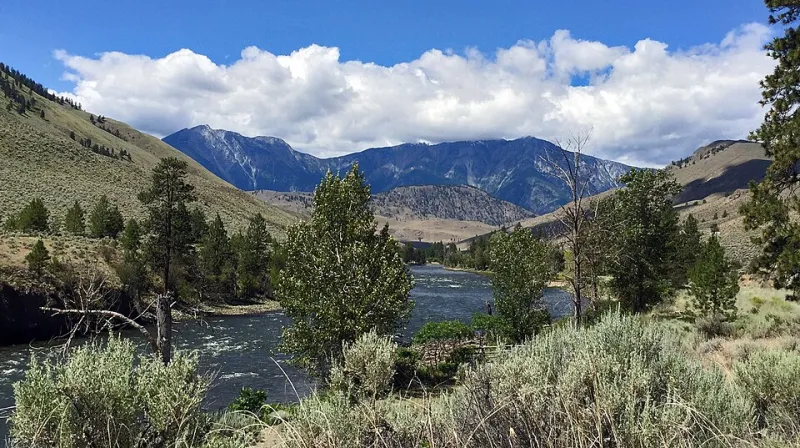
Photo: BLM Oregon & Washington, Public domain, via Wikimedia Commons
Let's be honest: if you live in Wenatchee and you only run on pavement, you're kind of missing the point.
That might sound harsh, but ask any local coach or seasoned trail runner and they'll tell you the same thing with a grin. This place — wedged between the Columbia River and the foothills of the Cascades, surrounded by sagebrush-covered ridgelines and pine forests that climb toward the sky — practically demands that you move in more than one way. The geography here isn't just scenic. It's a fitness curriculum, and running is only one class in the schedule.
The Terrain Tells You What You're Missing
Spend a season running Wenatchee's roads and you'll get faster. Spend a season ignoring everything else the valley has to offer and you'll eventually hit a wall — or worse, an injury.
Local running coach Dana Merritt, who's worked with athletes at everything from 5Ks to ultras, puts it plainly: "The runners I see get hurt most often are the ones who treat every workout like it's a road race. They build mileage, they push pace, and they neglect the muscles that actually hold everything together when the ground gets uneven."
And in Wenatchee, the ground gets uneven fast. You can start a run on a flat riverside path, turn uphill toward the Saddle Rock Natural Area, and suddenly you're picking your way across loose basalt and steep singletrack. Your ankles, hips, and core are being asked to do a completely different job than they were twenty minutes ago. If those muscles haven't been trained for that transition, that's where problems start.
What Cross-Training Actually Looks Like Here
The good news is that Wenatchee makes cross-training almost embarrassingly easy. You don't need a gym membership or a complicated program. You just need to look around.
Cycling the Wenatchee Valley: The Apple Capital Loop Trail and the surrounding road network give cyclists of every level a solid workout, and for runners, hopping on a bike means serious cardiovascular conditioning without the impact load on joints and tendons. Local triathlete and running enthusiast Marco Telles rides three days a week during his heavier running blocks. "It keeps my heart and lungs in shape while giving my legs a break from the pounding," he says. "I come back to running feeling fresher, and my times have actually improved."
Trail Running as Its Own Discipline: There's a difference between running on trails and training on trails. Athletes who deliberately seek out technical terrain — think the rocky switchbacks above the Columbia, or the forested paths out toward Mission Ridge — are building proprioception, ankle stability, and mental focus that flat road running simply can't replicate. Sarah Kwan, a Wenatchee-based runner who finished her first 50K last fall, credits trail-specific workouts with saving her from the recurring knee issues she battled for years. "The uneven ground forces your stabilizers to actually work. My knees stopped complaining once I stopped treating trails like they were just harder roads."
Rock Climbing and Bouldering: This one surprises people, but it shouldn't. The climbing areas around Wenatchee — including the popular crags near Peshastin and the bouldering spots scattered through the hills — are a full-body strength workout disguised as adventure. For runners, climbing builds grip strength, core stability, hip flexibility, and upper body power that translates directly into better running posture and hill performance. Coach Merritt often recommends one climbing session per week for her runners who are training for longer mountain races. "When you're pulling yourself up a boulder problem, you're training the same core engagement you need to maintain form at mile 18 of a trail race."
Swimming in the Columbia: Not everyone thinks of the Columbia River as a training tool, but open-water swimming — or even lap swimming at local facilities — is one of the most joint-friendly cardiovascular workouts a runner can do. It's particularly valuable during injury recovery or peak mileage weeks when the body needs active recovery without more stress.
The Mental Side of Mixing It Up
There's another dimension to cross-training that doesn't get talked about enough: it keeps you from burning out.
Running is a sport that rewards obsession, but obsession has a shelf life. Local runners who've been at it for years consistently say that mixing in other activities — a mountain bike ride on a Tuesday, a bouldering session on a Thursday — keeps their relationship with running fresh. When you come back to a run after a couple days doing something completely different, you remember why you liked it in the first place.
Telles laughs when he describes what happened the first time he took a full week off running to just ride and swim. "I came back wanting to run. Like, genuinely craving it. That hadn't happened in months." That mental reset is real, and it's something that purely single-sport athletes often have to learn the hard way.
Building Your Wenatchee Cross-Training Routine
You don't need to overhaul everything. Even small additions make a difference. Here's a simple framework that works for most recreational runners in the valley:
- 2-3 days: Your regular runs (mix road and trail where possible)
- 1 day: Cycling — road, gravel, or the loop trail
- 1 day: Strength-focused activity — climbing, yoga, or a bodyweight circuit
- 1 day: Low-impact cardio — swimming, easy hiking, or a casual paddle on the river
- 1 day: Full rest or gentle stretching
The specific mix matters less than the consistency. What you're going for is a body that's resilient across multiple movement patterns — one that can handle the sudden shift from river-flat to ridge-steep that Wenatchee regularly throws at you.
This Place Was Built for This
Wenatchee sits in a genuinely rare spot. Within thirty minutes, you can be running along a wide, flat river trail, pedaling through apple orchards, scrambling up a basalt ridgeline, or threading through pine forest on a mountain bike. Most cities would kill for one of those options. We have all of them.
The runners who thrive here long-term — the ones who stay healthy, keep improving, and actually seem to enjoy the process — are almost always the ones who've learned to use the whole landscape, not just the paved parts of it.
So if your training plan currently starts and ends with miles logged on the road, consider this your invitation to branch out. Your legs will thank you. So will your splits.