Why Runners Are Moving to Wenatchee Just to Train — And What the Science Says About It

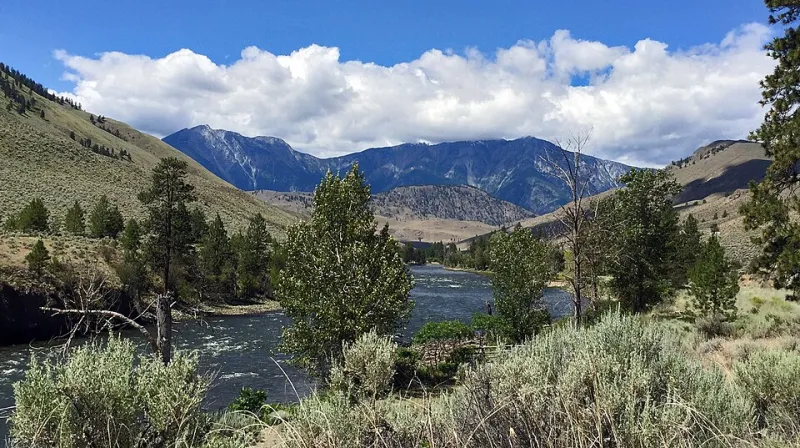
Photo: Dall-e 2, Public domain, via Wikimedia Commons
Most people who move to Wenatchee come for the orchards, the river, or the relatively affordable cost of living compared to the west side of the Cascades. But a quieter migration has been happening over the past several years — one driven not by real estate listings, but by elevation charts and race results.
Runners are showing up here on purpose. And they're leaving faster.
The Geography Nobody Talks About (But Should)
Wenatchee sits at roughly 2,100 feet above sea level in the rain shadow of the Cascades. That detail gets glossed over in travel guides, but it means everything to a serious endurance athlete. The city averages fewer than 12 inches of rainfall per year, summer temperatures regularly crack 90 degrees, and the air carries a dryness that Seattle runners genuinely aren't prepared for on their first visit.
Taken individually, those conditions sound like inconveniences. Together, they create a training environment that quietly stresses the body in ways that translate to real performance gains come race day.
"People underestimate what 2,100 feet does over months of consistent training," says Marcus Telford, a running coach who moved his small group training program from Redmond to Wenatchee four years ago. "It's not Flagstaff. It's not Mammoth Lakes. But it's not sea level either, and that difference compounds."
What Happens to Your Body Up Here
The physiology isn't complicated, but it is genuinely interesting. At altitude — even moderate altitude like Wenatchee's — the partial pressure of oxygen in the air drops slightly compared to sea level. Your body responds by producing more erythropoietin, or EPO, a hormone that stimulates the creation of red blood cells. More red blood cells means more oxygen delivery to working muscles. More oxygen means more sustainable power output.
This is the same principle behind elite training camps in places like Boulder, Colorado, and Flagstaff, Arizona. Wenatchee isn't at 7,000 feet, but research suggests meaningful hematological adaptations begin occurring at elevations as low as 1,500 to 2,000 feet when exposure is prolonged — which, if you live here, it absolutely is.
The low humidity adds another layer. Training in dry air forces your respiratory system to work harder to humidify each breath, which over time strengthens the muscles involved in breathing and improves ventilatory efficiency. When you race at a humid, sea-level event in Seattle or Portland, those adaptations don't disappear — they give you a subtle but real aerobic cushion.
"I ran a half marathon in Tacoma last October and felt like I had an extra gear the whole race," says Priya Nambiar, a mid-pack runner who relocated from Bellevue 18 months ago primarily for work but quickly noticed changes in her fitness. "My coach back west always told me I had a ceiling. I don't think that ceiling exists anymore."
The Heat Factor — An Overlooked Edge
Wenatchee summers are legitimately hot. If you've done a long run along the river in July, you already know this. But that discomfort is doing something useful.
Heat acclimatization training has become one of the more fashionable topics in endurance sports science over the last decade, and for good reason. Consistent exposure to heat stress triggers plasma volume expansion — essentially, your blood becomes slightly more voluminous, which improves cardiovascular efficiency and helps regulate core temperature more effectively. Athletes who train in the heat and then race in cooler conditions often perform better than their training metrics alone would predict.
Telford incorporates this deliberately into his coaching. "We don't hide from the heat in July and August. We use it. Then when my athletes go run a fall race in a cool Pacific Northwest morning, they feel superhuman."
Coaches Who Came Here for Exactly This Reason
Telford isn't the only coach who identified Wenatchee's potential as a training environment. Sandra Okafor, who coaches a small group of competitive masters runners, spent two years researching where in Washington state offered the best combination of accessible trails, moderate altitude, and climate variability before landing here.
"I looked at the data before I looked at the scenery," she says, laughing. "The scenery turned out to be a bonus. But the training environment was the whole point."
Her athletes have collected podium finishes at regional events including trail races in the Methow Valley, road races in the Tri-Cities, and even a few national-level masters competitions. She's careful not to attribute everything to geography — training quality, recovery, and consistency matter more than any single environmental factor — but she's firm that the altitude and climate provide a baseline advantage her athletes didn't have when they trained at lower elevations.
Trails That Make the Advantage Compound
It's not just the air. Wenatchee's trail system adds another dimension to the training edge. The Sage Hills network, the climbing routes around Saddle Rock, and the extended ridge trails above the valley all offer sustained, technical elevation gain that builds the kind of leg strength and neuromuscular efficiency you simply can't replicate on flat pavement.
Runners who log consistent miles on these trails — dealing with loose volcanic rock, steep pitches, and variable footing — develop a running economy that shows up in unexpected ways. Road runners who cross-train on local trails often report improved form, stronger hip stabilizers, and a more efficient stride.
"The trails here are honest," says Nambiar. "They don't let you coast. And that honesty makes you better."
Should You Move Here Just to Train?
Probably not — unless the rest of your life lines up with it. But if you're already here, or already considering a move for other reasons, the training environment is a legitimate factor worth weighing.
For runners who are serious about improving regional race performance, Wenatchee offers something that's genuinely hard to find in the Pacific Northwest: a combination of moderate altitude, heat stress, technical trails, and low humidity that creates layered physiological adaptations over time.
The runners who've been here long enough to feel those adaptations pay off on race courses from Bellingham to Boise will tell you it's not a coincidence.
The valley has been building better runners quietly for years. Now people are starting to notice.