What Happens to Your Brain When You Run in Wenatchee — And Why It's Not Like Anywhere Else
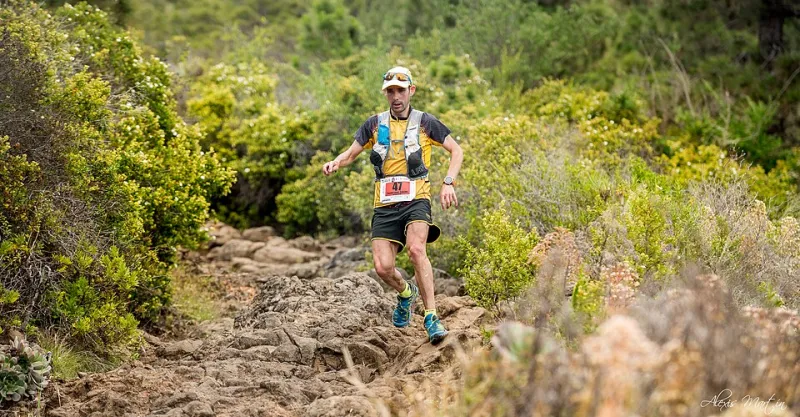
Photo: Alexis Martín from España, CC BY-SA 4.0, via Wikimedia Commons
Most people move to Wenatchee for the orchards, the sunshine, or the slower pace. Runners, though? They stay because of what this place does to them — and we're not just talking about stronger quads or better VO2 max numbers.
There's something genuinely different happening when you train along the Columbia River, push up into the canyon terrain, and navigate the kind of rapid climate shifts that go from desert-dry valley floor to cool alpine ridge in the span of a few miles. Coaches and athletes in the area are starting to talk about it more openly: Wenatchee doesn't just build better runners. It builds differently-wired runners.
The Environment as a Training Partner
Let's start with what makes this place unusual. Wenatchee sits in a high desert river valley carved by the Columbia, ringed by mountains that push elevation changes on you fast. You can start a run at around 640 feet in the valley and find yourself gasping your way past 2,000 feet within a few miles. The air is drier than almost anywhere else in Washington. Summer temperatures regularly push into the 90s. And the terrain itself — rocky, uneven, constantly shifting underfoot — demands a level of real-time attention that a treadmill or a flat road loop simply doesn't.
All of that adds up to a sensory environment that's constantly feeding your nervous system new information.
"Your brain doesn't get to go on autopilot out here," says one local coach who leads trail groups in the Sage Hills area. "On a flat route, your body finds a rhythm and your mind kind of clocks out. Here, you're processing terrain, heat, wind, gradient — all at once. That's a different kind of cognitive load, and over time, your brain gets really good at managing it."
What Neuroscience Actually Says About Variable Terrain
Research into what's sometimes called "environmental enrichment" in exercise neuroscience suggests that varied, unpredictable physical environments drive stronger neuroplastic responses than monotonous ones. When your brain is forced to constantly recalibrate — adjusting stride for a loose rock, compensating for a sudden grade change, managing thermoregulation in dry heat — it's activating neural pathways that flat-surface running simply doesn't reach.
The cerebellum, which handles balance and motor coordination, gets a significantly heavier workout on technical terrain. The prefrontal cortex — the part of your brain involved in decision-making and focus — stays engaged in ways it doesn't when you're on a track. And the insula, which processes internal body signals like pain, fatigue, and effort perception, gets trained to communicate more efficiently when your body is regularly navigating real physical stress.
In plain terms: running in a place like Wenatchee teaches your brain to handle hard things better. And that adaptation doesn't stay neatly boxed inside your running shoes.
The Resilience Factor — What Local Runners Notice
Ask almost any experienced Wenatchee runner what changed after their first full season training here, and a few themes come up again and again.
One runner who relocated from the Pacific Coast a few years back put it this way: "I used to fall apart mentally around mile eight or nine. I'd done plenty of long runs back home, but they were mostly flat. When I started running the canyon routes here, something shifted. It wasn't just that I got tougher — it's like I got better at reading myself. I could tell the difference between real suffering and just being uncomfortable, and I stopped quitting at uncomfortable."
That distinction — between genuine physical limits and the mental noise that mimics them — is something coaches across endurance sports spend enormous energy trying to teach. In Wenatchee, the terrain teaches it for them.
Another local runner, a longtime resident who has completed several ultras in the region, describes the Columbia River routes as "honest." "The river loop has no mercy," she laughs. "The wind comes at you, the sun is relentless, the path changes. You can't fake your way through it. But after a summer of that, I went and ran a race in a city and it felt like cheating. My brain was ready for so much more than it got."
Altitude Lite — Why the Elevation Here Hits Different
Wenatchee isn't a high-altitude training destination in the traditional sense. You're not camping at 10,000 feet. But the rate of elevation change matters more than most runners realize.
Moving from valley floor to canyon ridge and back in a single run repeatedly stresses your cardiovascular system in ways that sustained flat-altitude exposure doesn't replicate. Your heart rate spikes, recovers, spikes again. Your respiratory system is constantly recalibrating oxygen delivery. Do that week after week, and you're building a cardiovascular engine with a much wider dynamic range — one that can accelerate and recover more efficiently than one trained on steady-state efforts.
Coaches sometimes describe this as "interval training you didn't sign up for." The terrain imposes it naturally. And unlike structured track intervals, it comes wrapped in real environmental stress — heat, wind, uneven footing — which means the adaptation is more complete.
Starting Out Here: What Beginners Should Know
If you're new to running in Wenatchee and the terrain feels overwhelming, that's actually a sign it's working. The discomfort of navigating unfamiliar ground, managing effort on a climb, or staying focused in the heat is the stimulus your brain needs to start building those adaptations.
A few things that help early on:
- Go slower than you think you need to. The goal on trail and canyon runs isn't pace — it's time on feet and consistent engagement with the terrain.
- Don't skip the valley routes. The river paths aren't just recovery runs. Wind, surface variation, and heat exposure along the Columbia add up to real training stress even when the grade is flat.
- Run without headphones occasionally. Environmental awareness is part of what makes this place neurologically useful. Let your brain actually process where it is.
- Give it a season. The adaptations being described here don't happen in a week. Runners who stick with Wenatchee terrain through a full season — heat, cold, wind, varying conditions — come out the other side genuinely different.
Why This Place Produces Durable Athletes
There's a reason the runners who come up through Wenatchee's trails tend to perform well when they travel to races elsewhere. It's not just fitness. It's that their nervous systems have been trained in an environment that demanded more than most racing courses will ever ask for.
When race day comes and the conditions get hard — a long climb, unexpected heat, a mental wall at mile 20 — Wenatchee runners have a reference point. They've been there before. Their brains have already written the script for pushing through it.
That's the real gift this geography gives. Not just stronger legs. A tougher, smarter, more adaptable mind — one that got that way because the Columbia River canyon and the high desert hills simply didn't give it any other option.