Eat Like the Desert Demands: A Wenatchee Runner's Guide to Fueling in Extreme Conditions
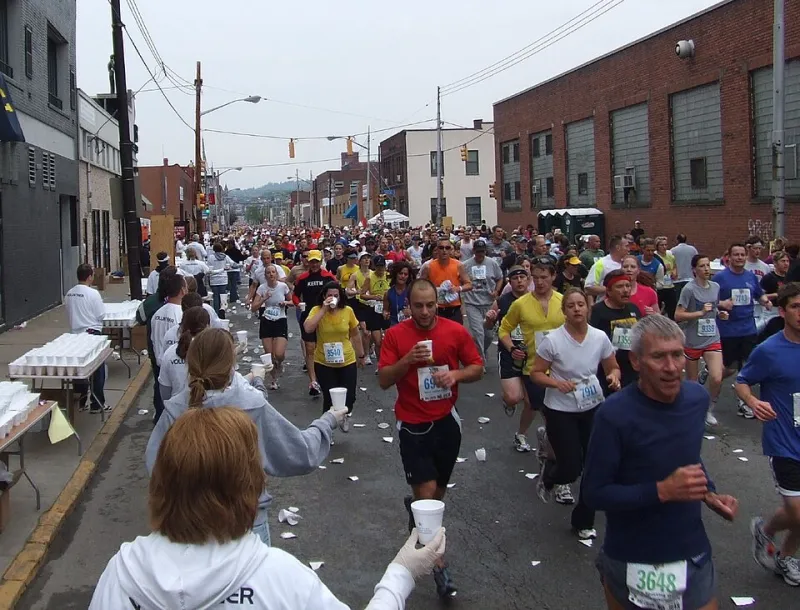
Photo: John Marino from Pittsburgh, The fine US of A, CC BY 2.0, via Wikimedia Commons
If you've ever finished a run in Wenatchee feeling completely wiped out — way more than the mileage should've warranted — there's a decent chance your legs weren't the problem. The culprit is more likely what you did or didn't put in your body before, during, and after that run.
Wenatchee sits in a high desert valley carved by the Columbia River, perched at roughly 1,100 feet with surrounding terrain that climbs fast and hard. Summer temps regularly push past 95°F. Humidity hovers embarrassingly low. And if you're heading up into the Cascades for a trail run, you're stacking altitude stress on top of all of it. That combination — heat, aridity, and elevation — creates nutritional demands that are genuinely different from what most running guides talk about.
We talked to local runners, a longtime Wenatchee-area running coach, and a sports nutritionist who works with endurance athletes in the Pacific Northwest to break down what your body actually needs out here.
Why Wenatchee's Climate Is a Different Animal
Most mainstream running nutrition advice is written with somewhere like Seattle or Chicago in mind — places where humidity keeps sweat on your skin a little longer and the air doesn't actively pull moisture out of you just by breathing it.
Wenatchee is not that place.
"The low humidity is sneaky," says longtime local runner Dana Ferrell, who's been logging miles in the valley and up into the Cascades for over a decade. "You don't feel as sweaty as you would somewhere humid, so you think you're fine. But you're losing fluid constantly and you don't always notice until it catches up with you."
That's the deception of dry air. Sweat evaporates almost immediately, which can make you feel cooler and less depleted than you actually are. Meanwhile, your body is burning through fluid and electrolytes at a pace that would surprise most runners who moved here from wetter climates.
Add even a modest elevation gain — and around Wenatchee, that happens fast — and your respiratory rate climbs, meaning you're exhaling more water vapor with every breath. Hydration math changes quickly.
Hydration: More Than Just Drinking Water
The first mistake Wenatchee runners make, especially newcomers, is treating hydration like a simple volume problem. Drink more water, problem solved. Except it's not.
"When you're sweating heavily in dry heat, you're losing sodium, potassium, and magnesium alongside that fluid," explains certified sports nutritionist Alicia Montoya, who consults with endurance athletes throughout the Inland Northwest. "If you just replace the water without replacing the electrolytes, you're diluting what's left in your system. That's when you start cramping, feeling foggy, or hitting a wall that doesn't make sense given how far you've gone."
Montoya recommends that Wenatchee runners — particularly those heading out for anything over 45 minutes in summer — start thinking about electrolytes before they feel thirsty. By the time thirst kicks in at altitude and in dry heat, you're already playing catch-up.
Practical starting points she suggests:
- Pre-run: 16–20 oz of water in the hour before heading out, with a small pinch of sea salt or an electrolyte tablet if it's going to be hot
- During: Aim for 6–8 oz every 15–20 minutes on runs over an hour, and consider a sodium-containing sports drink or gel rather than plain water on longer efforts
- Post-run: Rehydrate with something that includes sodium to help your body actually retain the fluid — chocolate milk, a sports drink, or a salty snack alongside water all work
What to Eat Before You Head Out
Coach Marcus Lindahl has been working with runners at all levels in the Wenatchee area for years, and he's pretty blunt about pre-run nutrition: most people either overdo it or skip it entirely.
"I see two camps," he says. "Runners who eat a massive breakfast before a morning run and feel terrible, and runners who go out completely fasted and wonder why they fall apart after mile four. Neither extreme works well here."
For runs under an hour in moderate conditions, a light snack 30–45 minutes out is usually sufficient — a banana, a piece of toast with peanut butter, or a small handful of dates. The goal is topping off glycogen stores without loading your gut.
For longer efforts, especially anything involving elevation gain in the heat, Lindahl recommends a more substantial carbohydrate-forward meal two to three hours before starting. Think oatmeal with fruit, a bagel with eggs, or rice with a bit of protein. "You want fuel in the tank, not fuel still being digested," he says.
One Wenatchee-specific consideration: if you're planning an early morning trail run that will take you significantly higher in elevation, your body may be working harder than the pace suggests. Plan your pre-run fuel accordingly, even if the mileage looks modest on paper.
Fueling Mid-Run in the Heat
On runs exceeding 60–75 minutes, mid-run fueling becomes less optional and more essential — especially in Wenatchee's summer conditions. The combination of heat stress and elevation means your body is burning carbohydrate faster than it would at sea level in cooler weather.
Local ultra runner Priya Okafor, who regularly trains on the trails above Wenatchee, swears by a simple rule: "Eat before you're hungry, drink before you're thirsty. Out here, if you wait for your body to tell you it needs something, you've already waited too long."
Gels, chews, and real food all have their advocates. What matters more than format is consistency — taking in roughly 30–60 grams of carbohydrate per hour on longer efforts, paired with sodium intake to keep absorption efficient.
Okafor also keeps a small bottle of pickle juice in her pack during peak summer. It sounds extreme, but the sodium and acidity have a well-documented effect on cramping, and in Wenatchee's dry heat, it's become a go-to for more than a few local endurance athletes.
Recovery Nutrition: Don't Skip This Part
Post-run recovery nutrition tends to get skipped because by the time you get home, you're tired and the hardest part feels over. But in a climate like Wenatchee's, recovery fueling matters more, not less.
Montoya emphasizes the 30–45 minute window after finishing a hard or long run. "Your muscles are primed to absorb carbohydrates and protein during that window. If you wait two hours to eat a real meal, you're leaving recovery on the table."
A quick and practical option that works well for local runners: a smoothie with banana, Greek yogurt, a handful of spinach, and a pinch of salt. It hits carbs, protein, electrolytes, and fluid all at once — and it's easy to get down when you're too tired to cook.
The Bottom Line for Running in Wenatchee
Fueling for Wenatchee's conditions isn't about following some rigid protocol — it's about understanding that this environment asks more of your body than a lot of places do. The dry air, the heat, the elevation, the fast-climbing terrain: they all add up.
Pay attention to hydration earlier than you think you need to. Take electrolytes seriously, not just water volume. Eat something before long efforts, fuel consistently during them, and don't skip the recovery window afterward.
The runners who thrive here long-term aren't necessarily the most talented — they're the ones who figured out how to take care of themselves in a climate that doesn't give much away for free.